Wrapping Up the 1,000 Mile Pilot
Dec 18, 2025
In 2016, discussions at Iowa State University about roadside pollinator habitat inspired Monarch Research staff to envision a large-scale restoration effort. Through collaboration with Linn County Secondary Roads, these ideas became the 1,000 Mile Pilot, which converted gravel roadsides into networks of small prairie plantings.
Creating 52,000 Mini-Prairies: Wrapping Up the 1,000 Mile Pilot
In 2016, members of the Monarch Research team attended a series of discussions at Iowa State University in 2016, where research by Dr. John Pleasants on roadside pollinator habitat sparked early conversation and curiosity. On the drive home from one of those meetings, Clark McLeod, Jim Hoffman, and John Cach began to form the initial concepts for a large-scale roadside restoration effort. Over the following years, through continued collaboration with Linn County Secondary Roads, those ideas developed into what became the 1,000 Mile Pilot.
 Project Development and Implementation
The Pilot focused on converting gravel-surfaced secondary roads throughout Linn County into a connected network of “mini-prairies.” Each mini-prairie was approximately 8 by 20 feet and installed at roughly 50-foot intervals where conditions allowed.
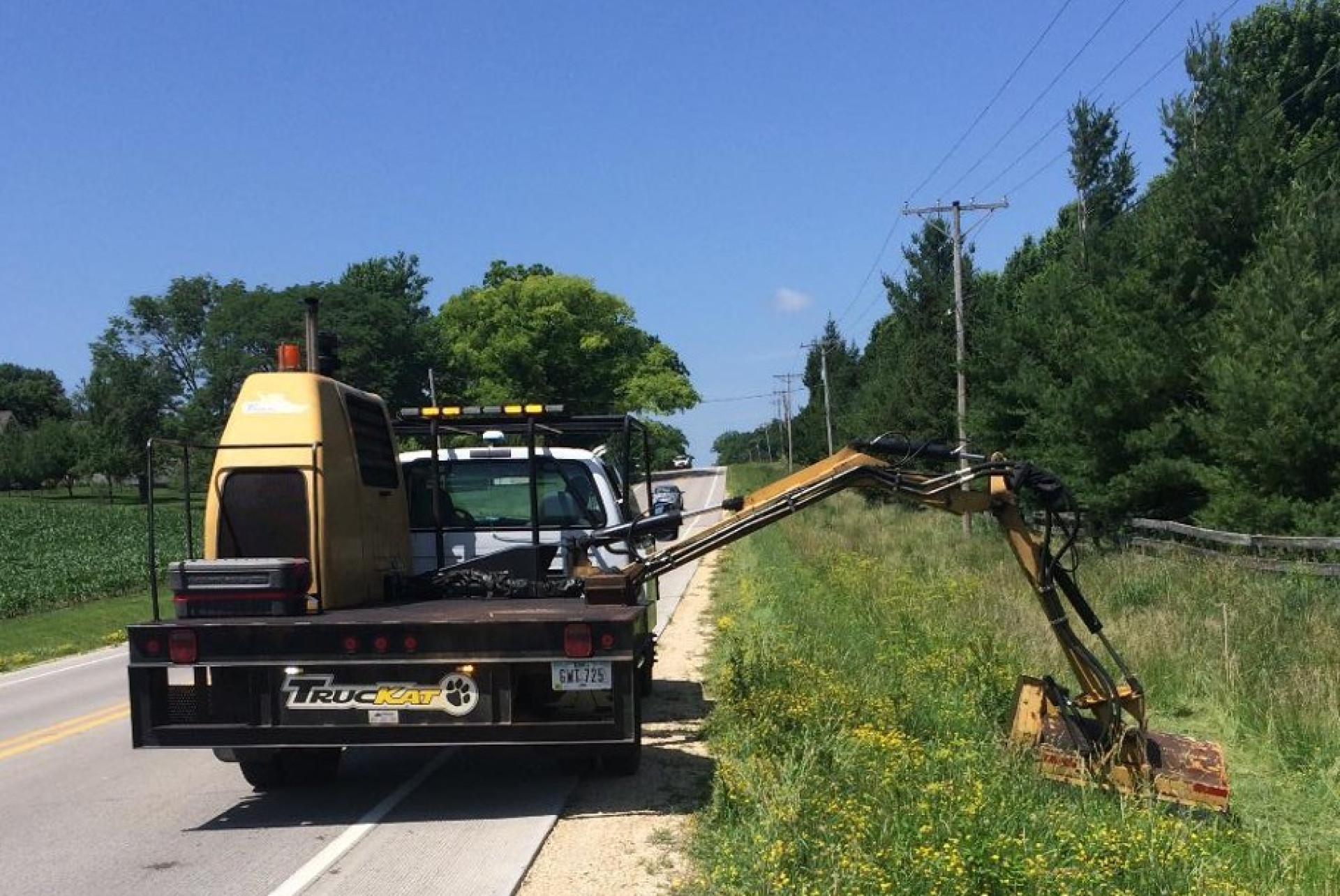
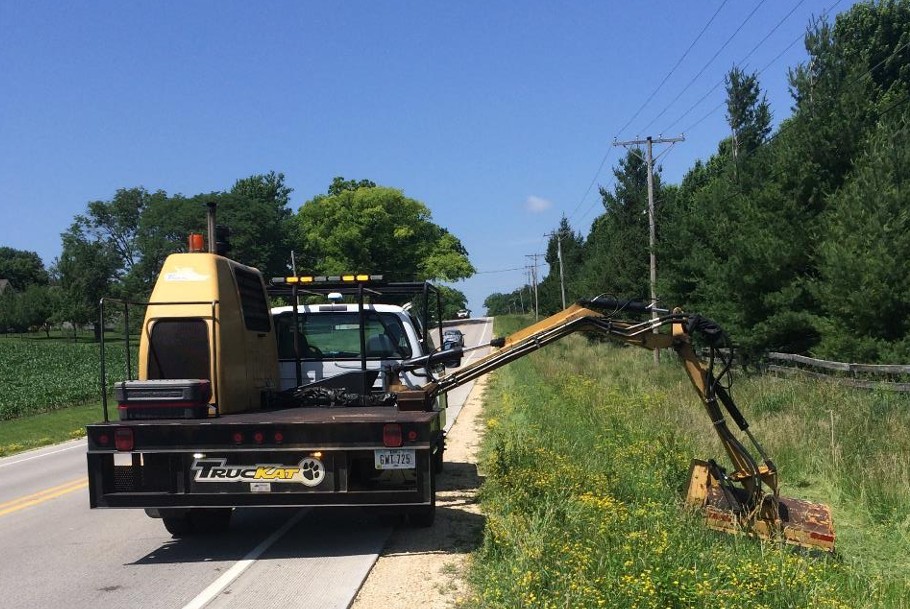
To carry out the work efficiently, the project team designed and built an innovative multi-function vehicle that became known as the “Swiss Army Truck.” Equipped with attachments for mowing, spraying and laying down seed mix, and rye overseeding (to reduce weed overload), the truck allowed thousands of plots to be prepared and planted in a consistent, streamlined process. The truck was also equipped with GPS that could precisely record every mini-prairie, allowing each of the plots to be accurately tracked and surveyed. Monarch Research staff spent hundreds of hours driving and planting along the gravel roads of Linn County.
Over the course of several years, more than 52,000 mini-prairies were created across nearly every gravel road in the county. Linn County Secondary Roads then conducted the required first-year mowings to support establishment.
Survey Findings
Because native species require multiple years to mature, Districts 1 and 2 - the earliest planted - were selected for the first formal surveys. With support from Kirkwood Community College students and staff, Linn County GIS mapping, and a structured sampling approach, surveys were conducted during the 2024 growing season.
Key observations include:
- Common milkweed appeared in 59% of surveyed sites
- At least one native species appeared in 77% of sites
- Roughly 25 species from the original 42-species seed mix showed consistent presence
- The top five species observed were Gray-Headed Coneflower, Wild Bergamot, Ox-Eye Sunflower, Foxglove Beardtongue, and Stiff Goldenrod
 Survey teams also documented native species not included in the seed mix. These are believed to be remnants of earlier IRVM plantings that persisted despite mowing and herbicide application - a notable finding given the level of site preparation.
Overall, the data suggests that roadside environments, despite being challenging growing conditions, can support establishment of diverse native species when prepared and seeded through a systematic process.
Significance and Future Implications
The 1,000 Mile Pilot served as both an implementation effort and a feasibility study. The project demonstrated that:
- - Large-scale roadside habitat installation is operationally achievable.
- - A single multipurpose vehicle can reduce time and labor requirements.
- - Public–private partnerships can enable habitat restoration on land that is otherwise unused.
- - Roadside corridors can contribute meaningfully to regional pollinator goals.
- - The Pilot also provides a tested framework that can inform future habitat work in other counties interested in similar roadside initiatives.
Acknowledgment
The project relied on collaboration across multiple partners, including Monarch Research staff, Linn County Secondary Roads, Iowa State University, Linn County GIS, and Kirkwood Community College. Their combined efforts made it possible to carry out the planning, fieldwork, and analysis required for a project of this scope.
The mini-prairies established during the Pilot will continue to grow and evolve over time. The information gathered during implementation and surveying will support future decisions about roadside vegetation practices and broader habitat restoration strategies throughout the region.