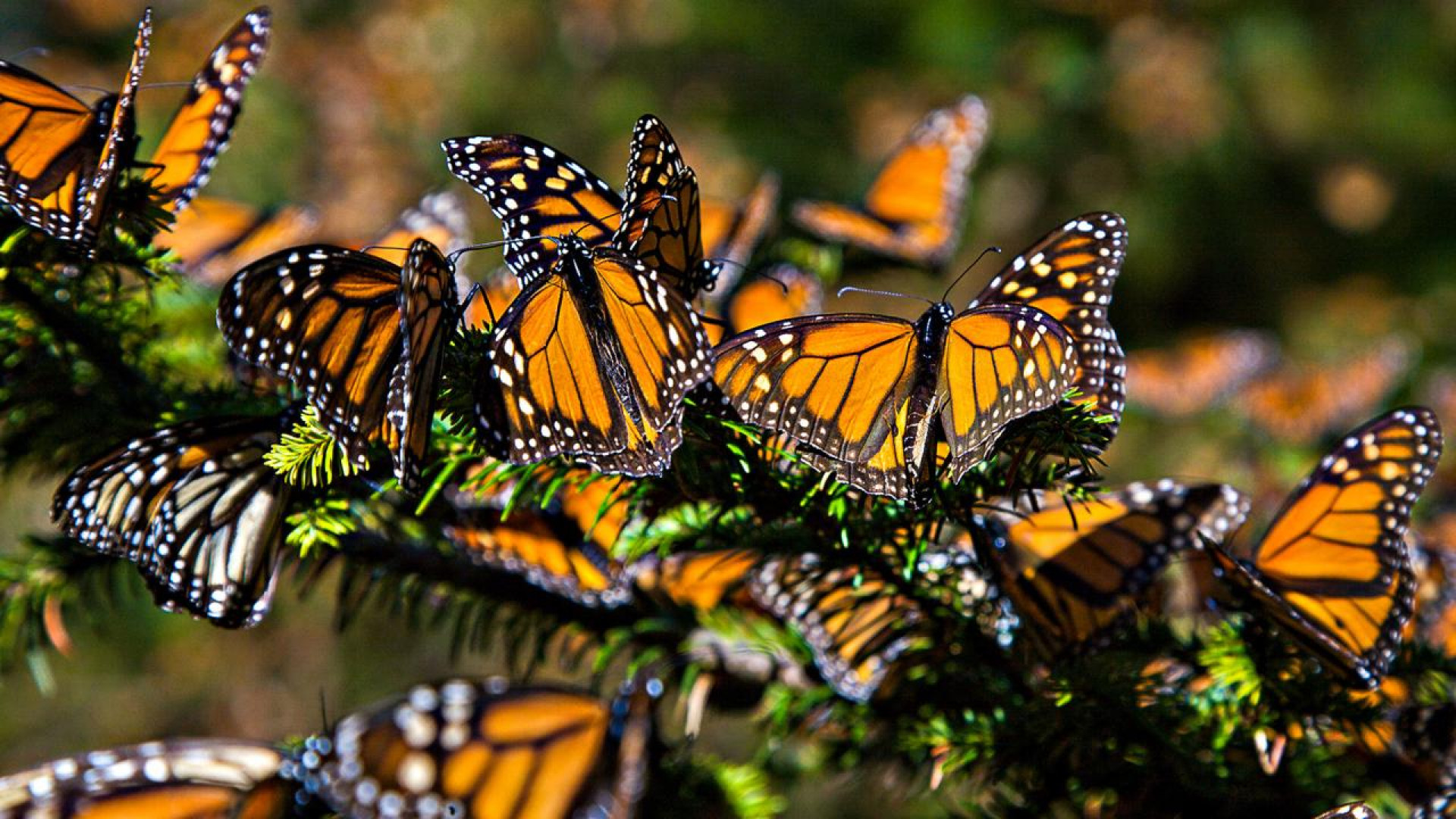
Monarch Research Launches BluMorpho Tagging Study
Aug 11, 2026
Monarch Research took part in an exciting new chapter in monarch butterfly research: using ultra-lightweight radio-transmitting tags to follow the movements of individual monarchs after release.
Following Monarchs in Real Time: Monarch Research Launches BluMorpho Tagging Study
On July 14 and 15, 2026, Monarch Research took part in an exciting new chapter in monarch butterfly research: using ultra-lightweight radio-transmitting tags to follow the movements of individual monarchs after release.
In collaboration with Dr. John Pleasants of Iowa State University, the Monarch Research team deployed BluMorpho tags on Iowa-raised monarchs at two locations in Linn County - the Monarch Research Station and Cedar Rapids’ Noelridge Park. The project provided an opportunity to test emerging tracking technology while exploring how it could help the public better understand the movements of monarchs during the summer breeding season.
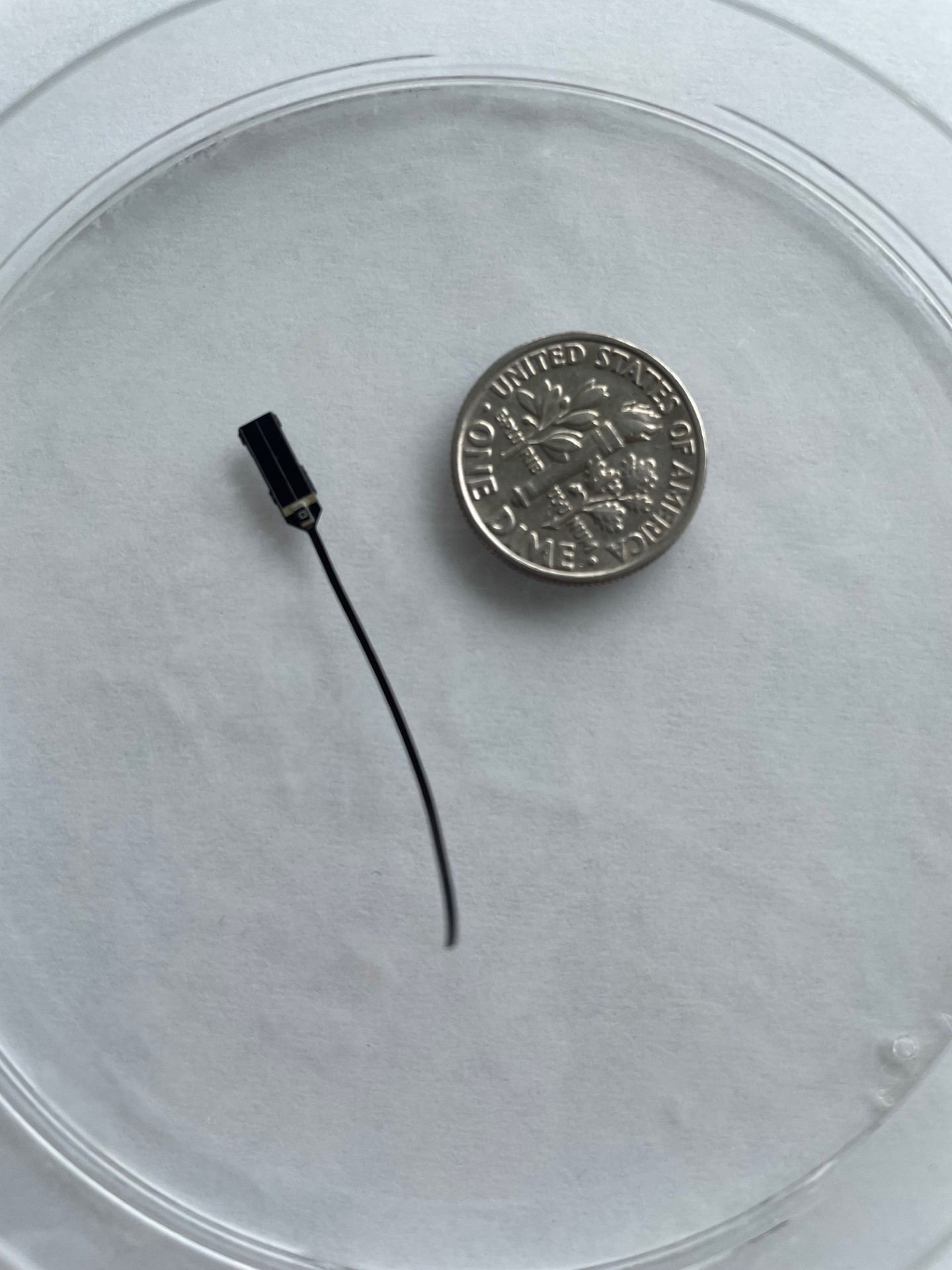 The BluMorpho Tag
In 2025, Cellular Tracking Technologies (CTT) released brand-new technology: an ultra-lightweight radio tag. Powered by incredibly small solar cells and containing no battery, the tags weigh only 60 milligrams. Like Monarch Watch’s popular sticker tags, nothing has indicated that the BluMorpho tag inhibits monarch flight.
Each tag has Bluetooth and cellular capability. Data points are created as these monarchs come within range of cellular devices equipped with Bluetooth and GPS technology. Each data point relays the time the tag was pinged as well as its location, eventually creating a map of travel across Linn County and beyond that can shed light on monarch behavior.
The key to utilizing this technology properly is community engagement. Quite simply, the more Bluetooth and location-enabled phones, the more data points can be collected. We encourage all members of the public to enable these two features, especially when spending time outdoors!
Community members can further their engagement by downloading the Project Monarch Science App on Apple or Android devices. After free registration, app users can press “Scan” to pick up any tagged monarchs in their vicinity. If a monarch is pinged, users can identify which monarch they’ve found and upload it into the system.
A map function is also available in the app. Users can view a map of the United States, zoom into Linn County, and see where each monarch was last detected.
The First Release - Monarch Research, July 14
July 14 marked the team’s first attempt at deploying radio tags.
The tagging process is detailed and precise. Before a transmitter could be attached, each monarch was cooled down to decrease activity before going through a detailed data-collection process. Monarch Research team members recorded the butterfly’s weight, wing length, sex, and overall condition.
The monarch was then carefully positioned on a “spreading” board designed to safely secure the butterfly. With its wings gently held in place, the lightweight transmitter was attached to the monarch’s thorax, just below the head.
Once tagging was complete, Dr. Pleasants and the Monarch Research team selected release sites on the Monarch Research Station grounds and released 11 monarchs. The monarchs took to the air, with the large majority landing on flowering native plants nearby. Phones began pinging, and data points were already coming through.
The Second Release - Noelridge Park, July 15
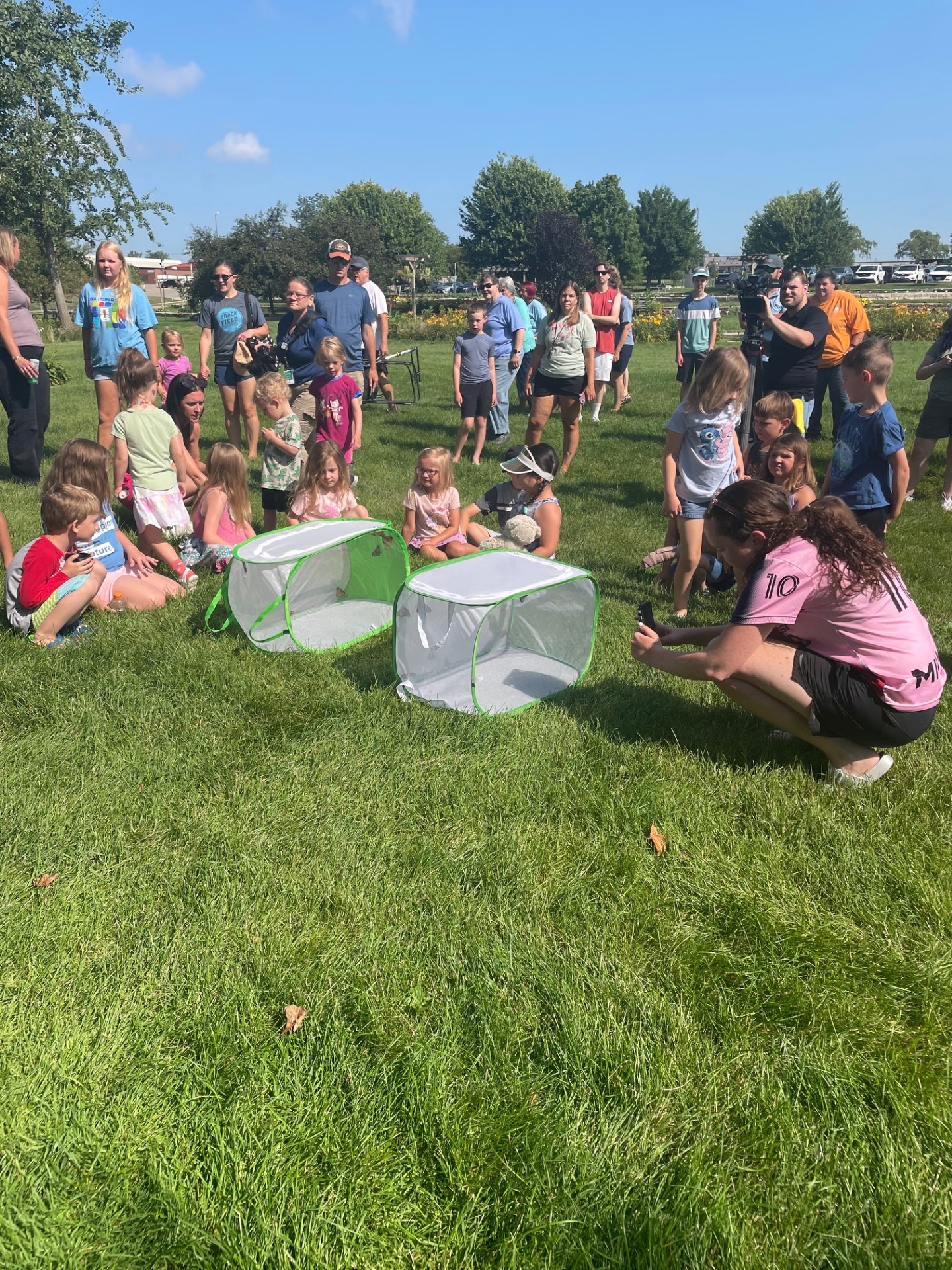
The second release took place at Noelridge Park in Cedar Rapids.
Noelridge Park has a plethora of native and non-native forbs, including a large prairie area. Being more accessible to the public, the park made for a great location to invite community members to join us.
With only 36 hours’ notice, 200 community members decided to join us. We released 14 monarchs and together tried to ping the monarchs with our phones as they flew to nearby plants.
The pop-up event was great evidence of the enthusiasm surrounding this study and made it clear that we will continue the project in future years.
Where Do the Monarchs Go Next?
That is ultimately the question behind the entire project.
Rightfully, the majority of BluMorpho tags have been utilized during the migration season, shedding more light on how monarchs across the eastern United States make the journey thousands of miles south to Central Mexico. While Monarch Research intends to eventually tag migrating monarchs, our initial focus is on summer monarchs.
Non-migratory movements are less studied and less understood. This study, and future studies like it, could help us better understand how to support our local Linn County monarchs.
Where does a monarch go in the hours and days after release? How far does it travel? Which habitats does it visit? Is it utilizing native backyard gardens or visiting larger swaths of prairie? How long does it remain in one area? And, particularly for females, how does it move across the landscape while searching for places to lay eggs?
As we digest the data, the Linn County community can direct its efforts in a more focused manner.
For example, it’s possible that we see strong monarch activity in private backyards near release sites. If so, Monarch Research Project’s Native Oasis program may be well suited to support our local monarch population. The program targets private residences that would like to convert a small section of their yard into a native garden. Each participant receives the resources needed to do so, including cardboard and mulch to prepare their site, approximately 70 native plants, rabbit fencing, and an educational sign.
It’s also possible that the monarchs more often visit larger swaths of native landscapes, such as prairie. If that’s the case, our community may need to invest more in our parks and large, underutilized spaces.
What Does Our Data Show So Far?
The lifespan of an adult “summer” monarch, or non-migratory monarch, ranges from 2–6 weeks. During that time, they are sipping nectar, mating, and, if female, laying eggs.
Our tagged monarchs are now roughly 4 weeks old, and we are starting to receive a strong picture of their movements, shown below. Each color represents one of the 25 released Monarchs. The largest data point for each color reflects that Monarch’s most recent ping. Smaller data points are all the pings recorded before the most recent. Together, they show us where the Monarch was last seen and how they got there.
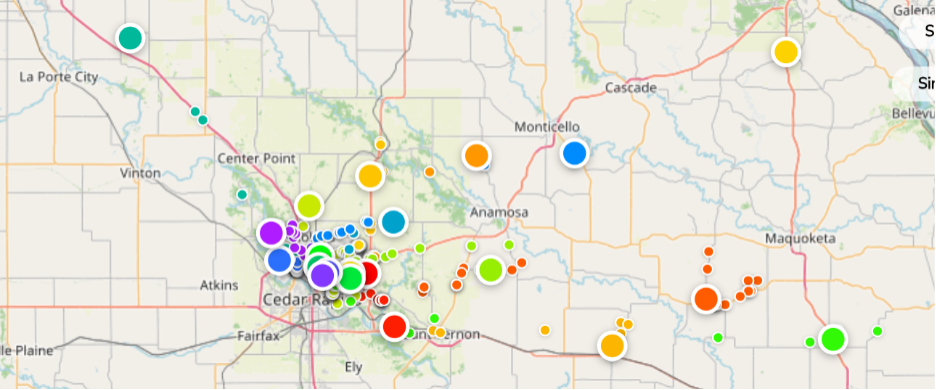
We can see that roughly half of the monarchs have decided to stay in the Cedar Rapids/Marion area, a few of which never left their release site at either Monarch Research or Noelridge Park.
Others, surprisingly, have traveled relatively great distances. One monarch even traveled northeast roughly 50 miles, at one point reaching Dubuque. We can’t be sure why many of the monarchs traveled these large distances, but future releases will build our sample size and give us more definitive data.
If we look closely at one monarch, MR-001, we can see how the presence of native habitat may have played a role in its movements.
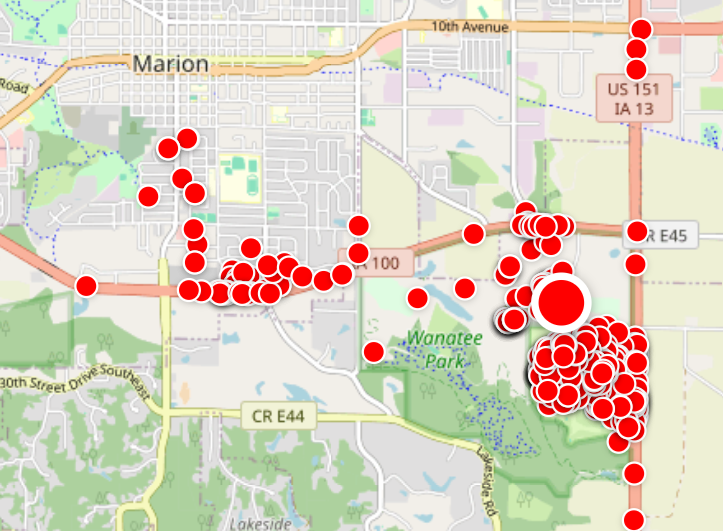
MR-001 was released at the Monarch Research Station near Highway 100. You can see that it quickly traveled north of the highway into the neighborhood surrounding Marion High School. Not long after, it made its way east, eventually discovering Gardner Golf Course.
MR-001 ended up spending weeks on the course, which was no surprise to us. In the late 2010s, the City of Cedar Rapids collaborated with Linn County and Monarch Research to establish prairie patches throughout the course.
Gardner now features some of Linn County’s best prairie, highlighted by its strong diversity of plants - including lots of milkweed - and low presence of invasive species. MR-001 may be a solid example of local monarchs utilizing both backyard plants and larger swaths of prairie.
Once we reach four weeks post-release, all tagging devices will be shut down. We will then begin to take a much closer look at our data. By walking through each monarch’s four-week journey and assessing every data point gathered, our hope is to identify which habitats were utilized most.