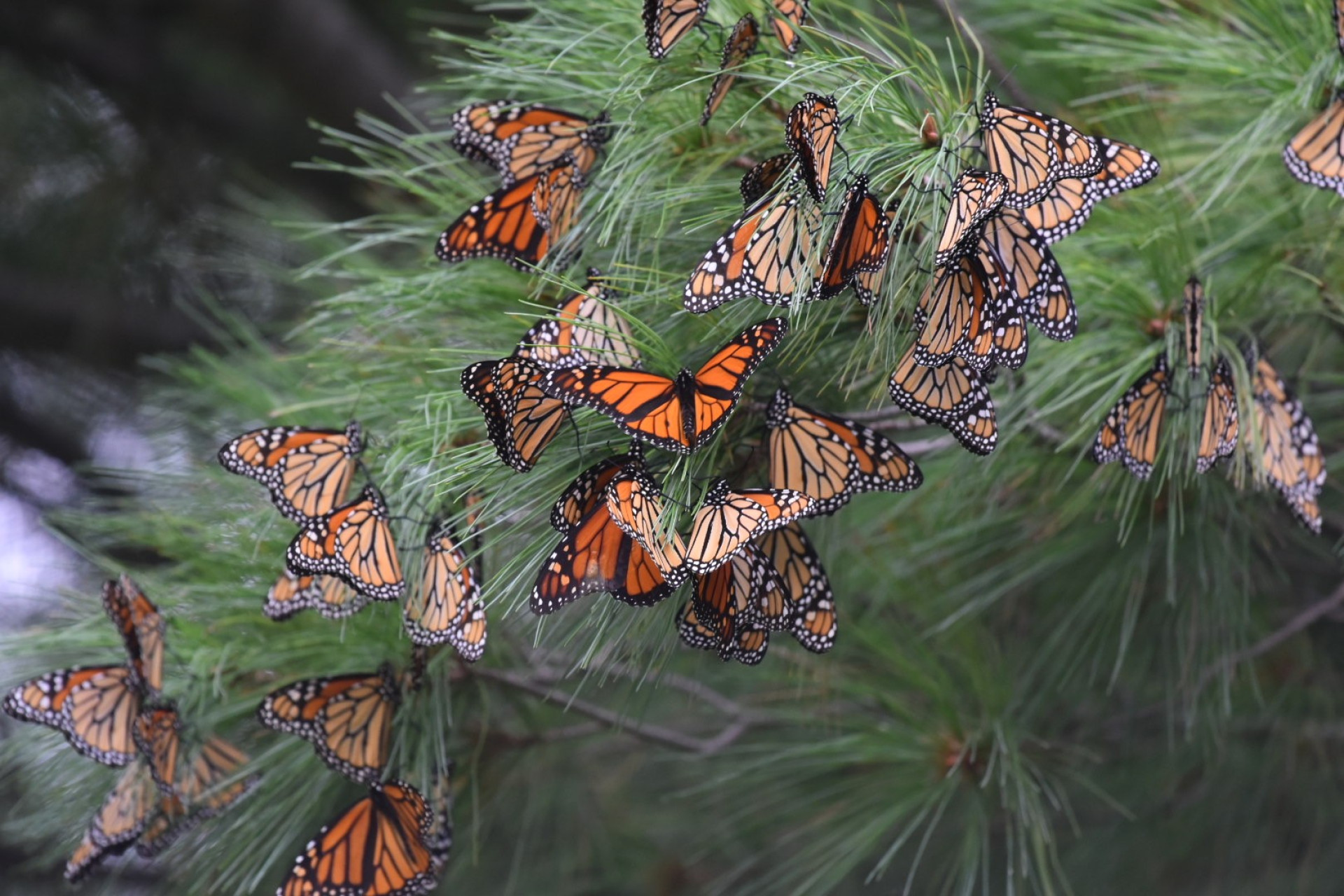
The Great Monarch Migration
Oct 28, 2026
Every fall, the eastern United States is host to the monarch migration. This year, the Monarch Research prairies welcomed thousands of monarchs as they made their way south to their overwintering sites in central Mexico.
Looking Back: The Great Monarch Migration
Every fall, the eastern United States is host to the monarch migration. Monarch butterflies are among the few butterfly species that undertake a long-distance seasonal migration, traveling thousands of miles from their summer breeding grounds in the United States and Canada to their overwintering sites in central Mexico.
Summer Monarchs vs. Migratory Monarchs
Most Iowa residents associate monarch butterflies with summer, and rightfully so. Monarchs primarily inhabit our state from May through September, producing multiple generations throughout the breeding season.
Typically, three generations of monarchs develop in Iowa during the summer months. These are often referred to as summer monarchs. After emerging from their chrysalises, these butterflies live approximately two to six weeks. During their relatively short lives, they forage for nectar, find mates, and, in the case of females, lay eggs on milkweed. Their primary objective is reproduction, allowing the population to grow with each successive generation as fall approaches.
However, many people overlook the fourth and final generation that develops in Iowa from late August through September. These butterflies, belong to what we call the migratory generation.
Although nearly identical in appearance to the summer generations, these monarchs undergo physiological changes that prepare them for an entirely different purpose: surviving the long and difficult journey to Mexico.
As summer transitions into fall, environmental cues signal a dramatic shift in monarch development. Shortening daylight hours, cooler temperatures - particularly at night - and aging milkweed plants indicate that conditions are becoming less suitable for reproduction - particularly laying eggs.
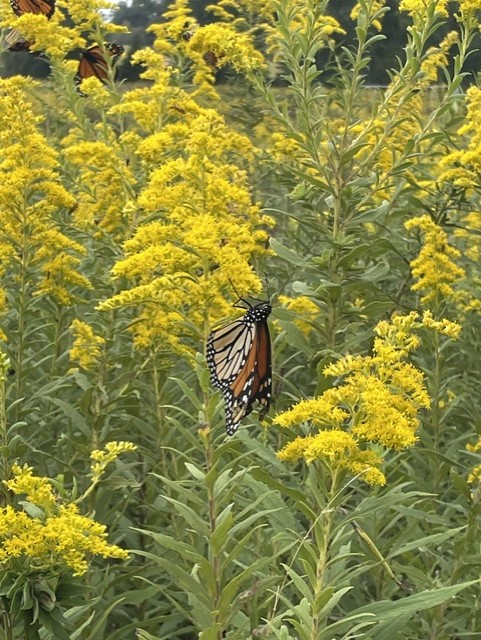
In response, migratory monarchs enter a physiological state known as reproductive diapause. Rather than immediately developing their reproductive systems and expending energy on spermatophore and egg production, these butterflies delay reproduction and redirect their resources toward protein and fat storage that is necessary for migration and winter survival.
This Fall shift allows migratory adult monarchs to survive for approximately six to nine months. From two to six weeks… to six-nine months!
These butterflies will travel thousands of miles south, spend the winter clustered in the mountainous forests of central Mexico (Oyamel Fir Forest), and begin their northward journey the following spring. Only then will they resume reproduction and begin laying the eggs that start the next annual cycle (Generation 1).
Signs of More Success in Linn County
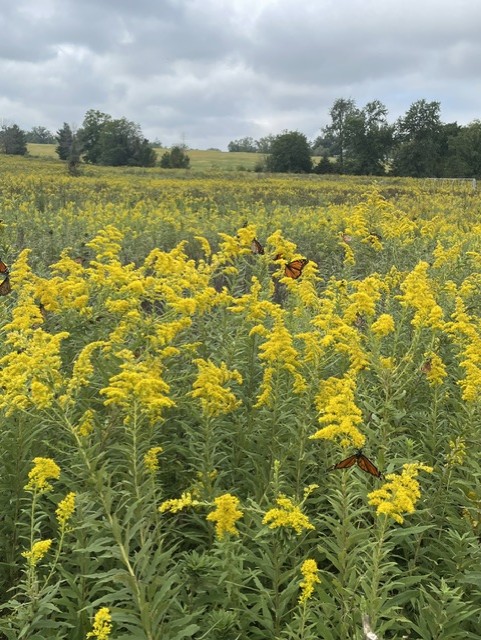
During the final two weeks of September, Linn County experienced what appeared to be an extraordinary wave of monarch migration.
Here at the Monarch Research Station, our prairies exploded with monarch activity as butterflies traveling south from northern breeding grounds passed through the area.
We estimate that more than 2,000 monarch butterflies visited the Monarch Research property over those two weeks.
Throughout the prairie, monarchs could be seen fluttering from flower to flower, busily collecting nectar to replenish the energy reserves needed for their journey. A weekly butterfly survey done on the grounds went from the typical 10-30 monarchs, to more than 300! Keep in mind, we only count butterflies that come within 6 yards of our person during these surveys.
Their presence highlighted the importance of late season native forbs. Goldenrods and asters dominate Iowa's late-season prairies, providing essential nectar resources when many other flowering plants have finished blooming. For migrating monarchs, these plants serve as critical fueling stations along their journey south.
And monarchs aren't the only species utilizing these plants. They’re also valuable for native bees, moths, and birds.
An Overnight Stay at the Monarch Research Station
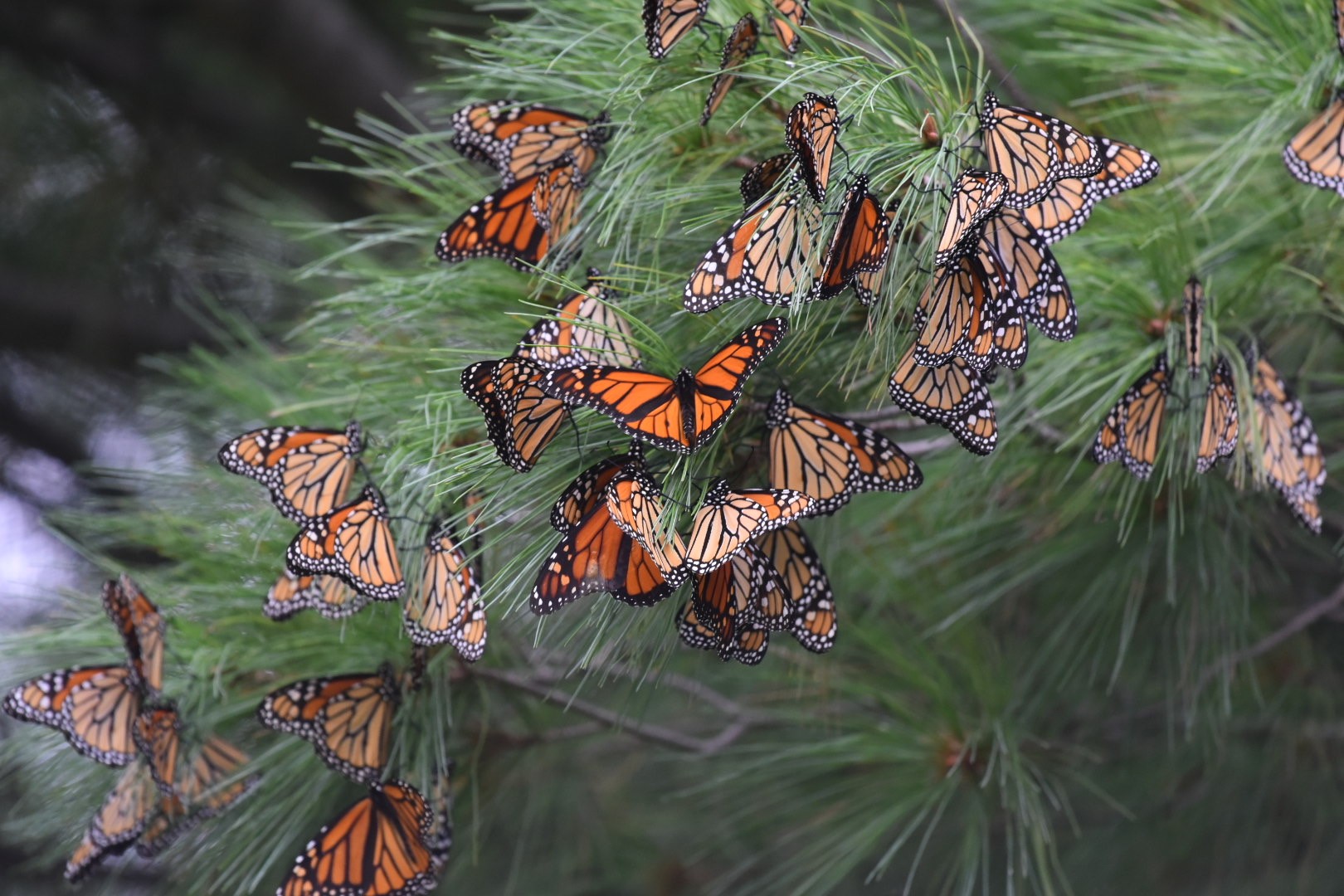
The Monarch migration tends to travel in groups. Unlike many migratory birds, monarchs travel primarily during daylight hours. As temperatures fall and dusk approaches, they seek sheltered locations to rest overnight. These gathering places are known as roost sites.
Monarchs frequently select trees that offer protection from wind and precipitation. Conifers, such as pines and spruces, seem to be the preferred choice, although monarchs also commonly use deciduous trees, such as oaks.
These roost sites keep monarchs warm and reduce exposure to harsh overnight conditions before continuing their journey the following morning.
For several consecutive evenings in September, we witnessed large groups of monarchs gathering among the tree branches at the Monarch Research Station as dusk approached.
What Does This Mean for the Monarch Population?
Each winter, scientists monitor the eastern North American monarch population after the butterflies arrive at their overwintering grounds in the Oyamel Fir Forests of central Mexico.
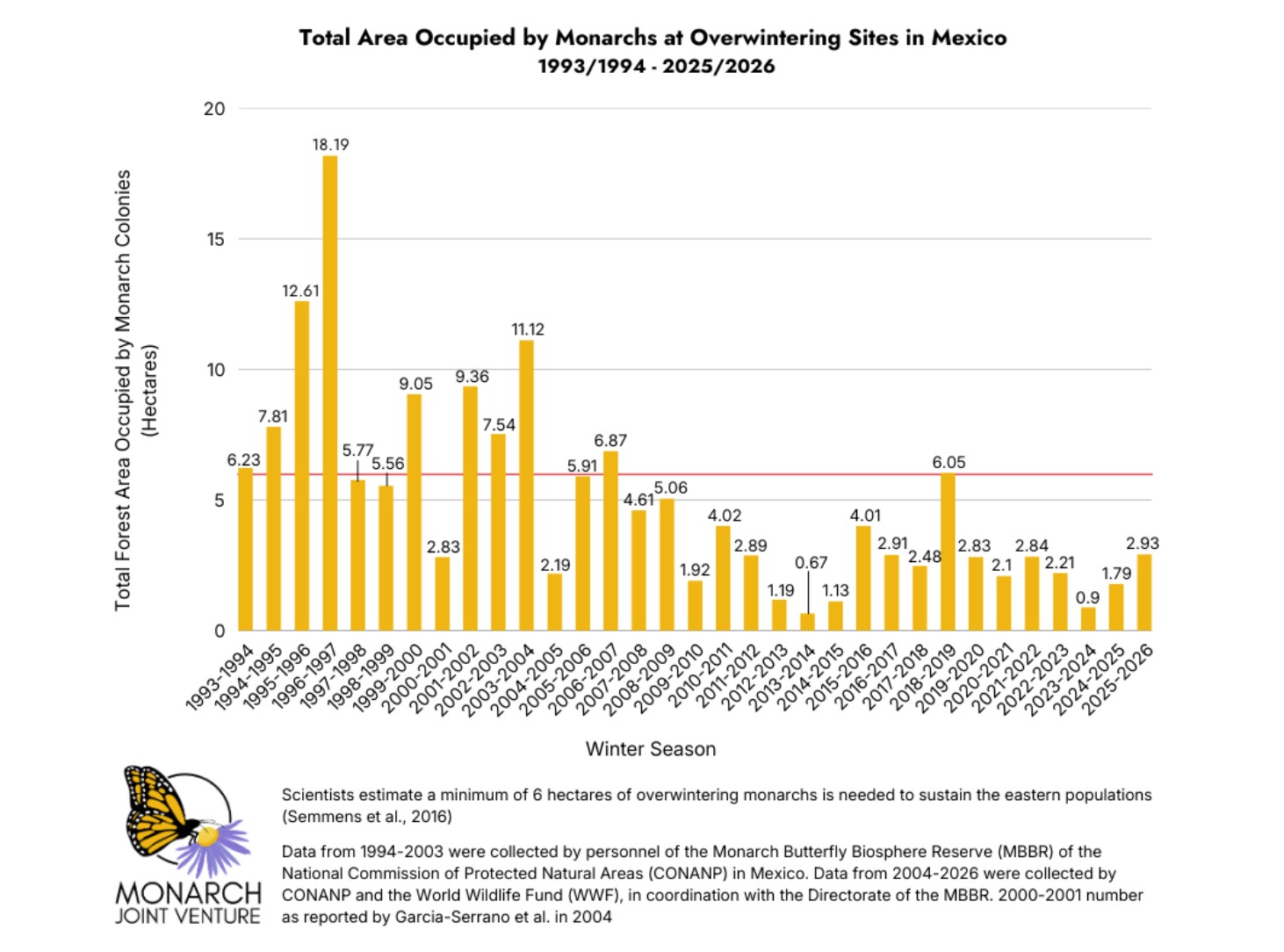
The World Wildlife Fund (WWF), working alongside Mexico's National Commission of Protected Natural Areas (CONANP), conducts annual surveys measuring the total area of forest occupied by overwintering monarch colonies.
Because millions of monarchs hibernate together, counting individuals is impractical. Instead, researchers measure the hectares (or acres) of forest occupied by these colonies, providing an estimate for their population.
These surveys have been conducted for roughly 30 years, offering valuable insight into long-term population trends.
Encouragingly, the eastern monarch population has increased during each of the past two overwintering seasons. The most recent survey documented a 64% increase over the previous year.
While we are trending upward, the population is still far lower than it has been historically, and continued conservation is crucial.
Following the impressive migration we witnessed in Linn County this September, we are especially eager to see the results of the upcoming 2026–2027 overwintering survey, which will likely be released in February or March.
It’s nearly impossible to determine whether the abundance of monarchs observed locally reflects a broader population increase across the eastern United States. Migration patterns can vary considerably from year to year and are influenced heavily by weather conditions on both the southward and northward migrations.
Nonetheless, Linn County appears to be a pretty good pit stop for migrating monarchs!
If We Build It, They Will Come
This year’s fall migration was a reminder that if we continue to push for conservation as a community, we can have a real impact.
Whether it's planting a small section of native plants in your backyard, establishing a prairie, or simply adding a few host plants (for example Milkweed) and nectar plants (such as asters), we can continue to support the monarch population as best we can.